Attribution Creative Commons Noncommercial No Derivatives Share Alike Zero

Group - Shemale

On the other hand, the terminology and framing used in this genre are deeply rooted in objectification and dehumanization. The word "shemale" is widely considered a derogatory slur outside the context of the adult industry, as it reduces a woman’s identity to a combination of female presentation and male genitalia. Group scenes often lean heavily into the "spectacle" of the transgender body, catering primarily to a cisgender male gaze that views these women as exotic fantasies rather than full human beings. This creates a stark paradox: trans women are highly visible and desired in the private sphere of sexual fantasy, yet they frequently face intense transphobia, violence, and lack of legal protection in the public sphere.

On one hand, the adult film industry has provided a platform for transgender performers to achieve visibility and financial independence. In a world where trans individuals often face severe employment discrimination, adult media has served as a space where their bodies are not only accepted but actively sought after. Group scenes in these films often showcase a celebration of transgender sisterhood and solidarity, creating a visual space where trans women are centered and desired. For some viewers, including questioning individuals or closeted admirers, this media offers a rare glimpse of transgender women expressing confidence and sexual agency. shemale group

Ultimately, the phenomenon of the "shemale group" in adult media is a double-edged sword. It highlights the vast, undeniable market of attraction toward transgender women, challenging the notion that they are undesirable. However, as long as this attraction is confined to a marginalized, fetishized category of entertainment, it stops short of promoting true acceptance. For transgender women to achieve genuine equality, society must move past the objectifying frameworks established by the adult industry and recognize transgender women as complete individuals deserving of respect, safety, and dignity in all aspects of life. On the other hand, the terminology and framing

Furthermore, the hyper-sexualization perpetuated by these group dynamics can have real-world consequences for the transgender community. When society's primary exposure to trans women is through aggressive, highly stylized adult media, it distorts the public understanding of what it means to be transgender. This narrow lens reduces a rich, diverse spectrum of gender identity to a mere sexual fetish. It can lead to the "chaser" phenomenon, where cisgender partners seek out trans women solely to fulfill a private sexual curiosity while refusing to acknowledge or respect them in public relationships. This creates a stark paradox: trans women are
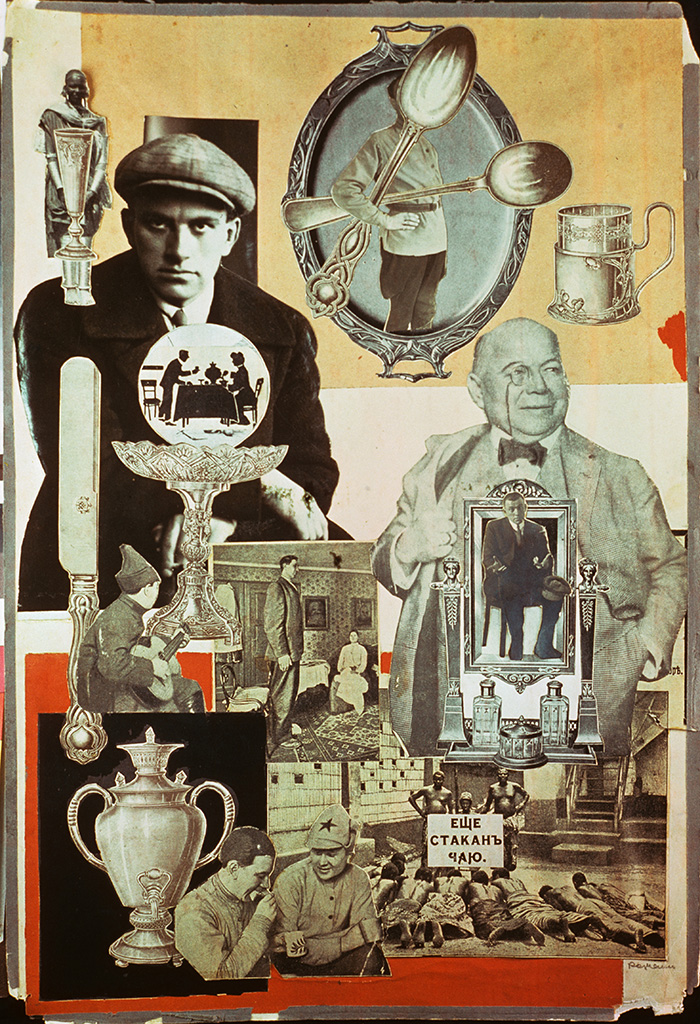
Fig. 1. — Brigade KGK (Viktor Koretsky [1909–98], Vera Gitsevich [1897–1976], and Boris Knoblok [1903–84]). “We had to overcome among the people in charge of trade the unhealthy habit of distributing goods mechanically; we had to put a stop to their indifference to the demand for a greater range of goods and to the requirements of the consumers.” From the 16th to the 17th Congress of the All-Union Communist Party (Bolsheviks), 1934, no. 57, gelatin silver print, 22.7 × 17 cm. Los Angeles, Getty Research Institute, 2014.R.25.
Fig. 2. — Brigade KGK (Viktor Koretsky [1909–98], Vera Gitsevich [1897–1976], and Boris Knoblok [1903–84]). “There is still among a section of Communists a supercilious, disdainful attitude toward trade in general, and toward Soviet trade in particular. These Communists, so-called, look upon Soviet trade as a matter of secondary importance, not worth bothering about.” From the 16th to the 17th Congress of the All-Union Communist Party (Bolsheviks), 1934, no. 56, gelatin silver print, 22.7 × 17 cm. Los Angeles, Getty Research Institute, 2014.R.25.
Collage of photographs showing Vladimir Mayakovsky surrounded by a silver samovar, cutlery, and trays; two soldiers enjoying tea; a giant man in a bourgeois parlor; and nine African men lying prostrate before three others who hold a sign that reads, in Cyrillic letters, “Another cup of tea.”
Fig. 3. — Aleksandr Rodchenko (Russian, 1890–1956). Draft illustration for Vladimir Mayakovsky’s poem “Pro eto,” accompanied by the lines “And the century stands / Unwhipped / the mare of byt won’t budge,” 1923, cut-and-pasted printed papers and gelatin silver photographs, 42.5 × 32.5 cm. Moscow, State Mayakovsky Museum. Art © 2024 Estate of Alexander Rodchenko / UPRAVIS, Moscow / ARS, NY. Photo: Art Resource.
Fig. 4. — Boris Klinch (Russian, 1892–1946). “Krovovaia sobaka,” Noske (“The bloody dog,” Noske), photomontage, 1932. From Proletarskoe foto, no. 11 (1932): 29. Los Angeles, Getty Research Institute, 85-S956.
Fig. 5. — Brigade KGK (Viktor Koretsky [1909–98], Vera Gitsevich [1897–1976], and Boris Knoblok [1903–84]). “We have smashed the enemies of the Party, the opportunists of all shades, the nationalist deviators of all kinds. But remnants of their ideology still live in the minds of individual members of the Party, and not infrequently they find expression.” From the 16th to the 17th Congress of the All-Union Communist Party (Bolsheviks), 1934, no. 62, gelatin silver print, 22.7 × 17 cm. Los Angeles, Getty Research Institute, 2014.R.25.
Fig. 6. — Brigade KGK (Viktor Koretsky [1909–98], Vera Gitsevich [1897–1976], and Boris Knoblok [1903–84]). “There are two other types of executive who retard our work, hinder our work, and hold up our advance. . . . People who have become bigwigs, who consider that Party decisions and Soviet laws are not written for them, but for fools. . . . And . . . honest windbags (laughter), people who are honest and loyal to Soviet power, but who are incapable of leadership, incapable of organizing anything.” From the 16th to the 17th Congress of the All-Union Communist Party (Bolsheviks), 1934, no. 70, gelatin silver print, 22.7 × 17 cm. Los Angeles, Getty Research Institute, 2014.R.25.
Fig. 7. — Artist unknown. “The Social Democrat Grzesinski,” from Proletarskoe foto, no. 3 (1932): 7. Los Angeles, Getty Research Institute, 85-S956.
Fig. 8A. — Pavel Petrov-Bytov (Russian, 1895–1960), director. Screen capture from the film Cain and Artem, 1929. Image courtesy University of California, Berkeley, Berkeley Art Museum and Pacific Film Archive Library.
Fig. 8B. — Pavel Petrov-Bytov (Russian, 1895–1960), director. Screen capture from the film Cain and Artem, 1929. Image courtesy University of California, Berkeley, Berkeley Art Museum and Pacific Film Archive Library.
Fig. 8C. — Pavel Petrov-Bytov (Russian, 1895–1960), director. Screen capture from the film Cain and Artem, 1929. Image courtesy University of California, Berkeley, Berkeley Art Museum and Pacific Film Archive Library.
Fig. 9. — Herbert George Ponting (English, 1870–1935). Camera Caricature, ca. 1927, gelatin silver prints mounted on card, 49.5 × 35.6 cm (grid). London, Victoria and Albert Museum, RPS.3336–2018. Image © Royal Photographic Society Collection / Victoria and Albert Museum, London.
Fig. 10. — Aleksandr Zhitomirsky (Russian, 1907–93). “There are lucky devils and unlucky ones,” cover of Front-Illustrierte, no. 10, April 1943. Prague, Ne Boltai! Collection. Art © Vladimir Zhitomirsky.
of